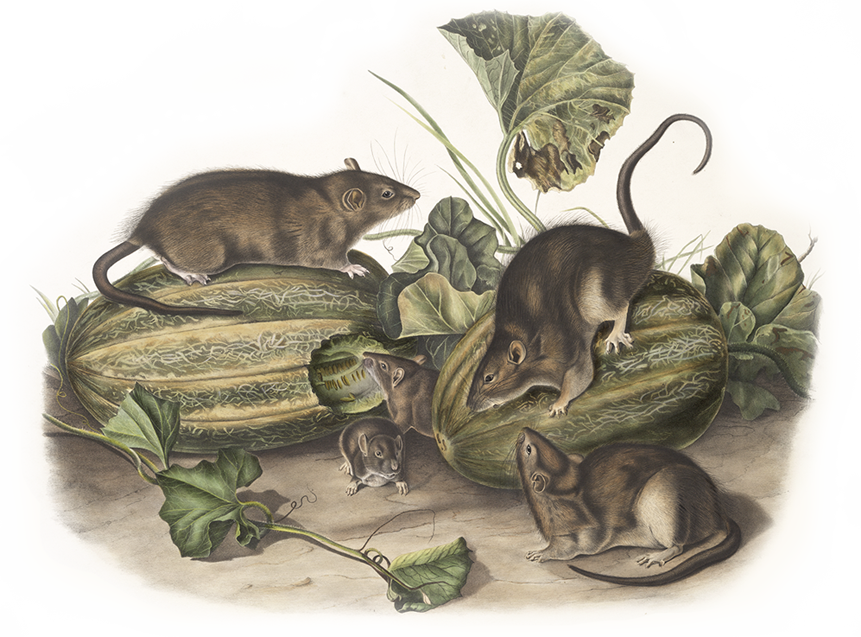
Above: Invasive Rattus norvegicus, illustrated by John Woodhouse Audubon around 1845.
Incursions by invasive species start small—on the hull of a boat, in a forgotten shipping crate, in a few grains of soil caught in a tire tread. Ecosystems that evolved in isolation suddenly face competitors, predators, and pathogens they never had the chance to prepare for. By the time we notice the damage, we’re miles behind the problem.
Invasive species are now one of the most powerful drivers of biodiversity loss on Earth. According to the IUCN, they are the sole cause of roughly 16% of all documented species extinctions and a co-driver in 56.7%. They’re associated with the extinction of more species than any other type of conservation threat. The economic impacts of invasions are also staggering, with some studies estimating costs of up to $21 billion per year in the United States alone.
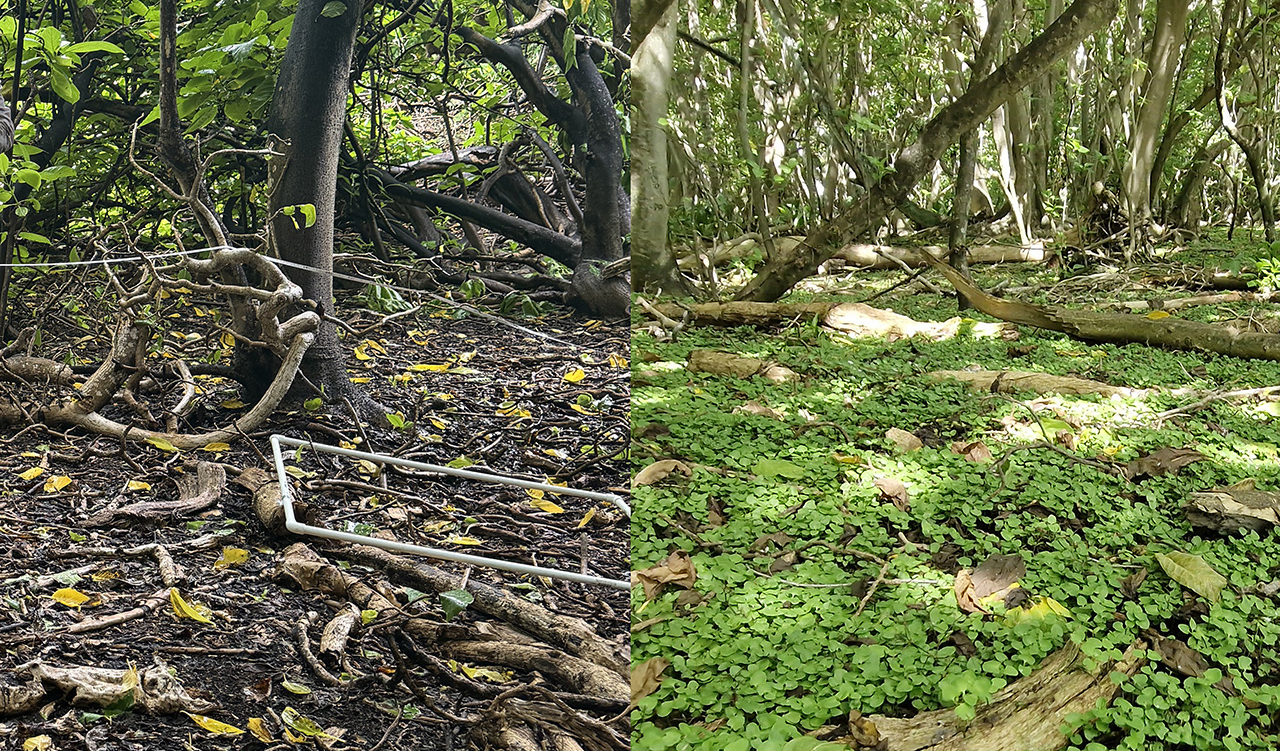
But the same qualities that make islands vulnerable also make them hopeful. Remove the invasive species, and the rebound can be just as swift. Native birds return to their nesting grounds. Seedlings reappear in places thought barren. Entire food webs knit themselves back together, sometimes within a year or two. That’s why islands remain one of the places on Earth where conservation interventions can be most effective.
Turning the tide requires early detection, rapid response, and the right tools. For decades, we’ve been too slow. You can’t remove what you can’t see. And without realtime monitoring, invasive species management becomes a constant uphill battle—reactive rather than strategic, expensive rather than effective.
─────────────────────────────────────────────────────────────────────────────────────
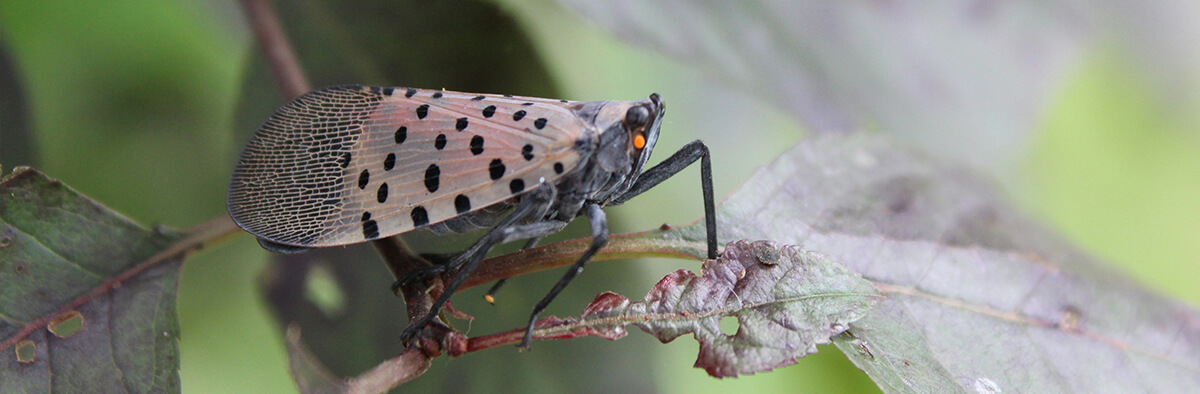
Invasive species can show up in a photo of a backyard garden, a snapshot from a weekend hike, or an image uploaded by someone who had no idea they were documenting the start of a problem. The Wild Me Labs team at CXL has turned those moments into a powerful early-detection network. Using advanced AI, our system scans images posted on platforms like iNaturalist, identifying species flagged by our users.
You can try it yourself now. When the AI flags a potential invasive species, the system can alert the appropriate scientists, managers, or agencies so they can act quickly—long before the species becomes established.
Learn more about the iNaturalist Invasives Monitor >
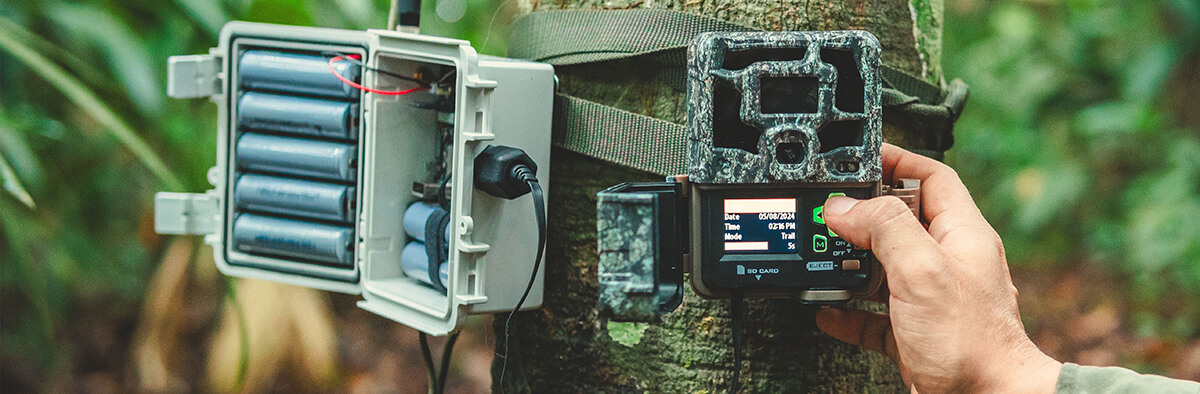
CXL's Sentinel device uses edge AI to turn passive wildlife camera traps into powerful realtime monitoring tools for land managers and conservation teams. Assessments show that the Sentinel costs 1/3 of traditional monitoring methods while achieving reaction times up to 1,000x faster. On Ulva Island in New Zealand, 30 Sentinel units captured more than 100,000 images and detected 45 rat incursions, transmitting alerts within hours. The system accurately flagged 100% of rats captured in photos. That precision allowed managers to intercept rats before they exponentially spread.
In Florida, the system has been used to detect invasive Burmese pythons—powerful predators that are devastating native wildlife across the Everglades. By providing continuous, real-time monitoring, Sentinel gives teams a way to respond early, act strategically, and stop invasions before they take hold.
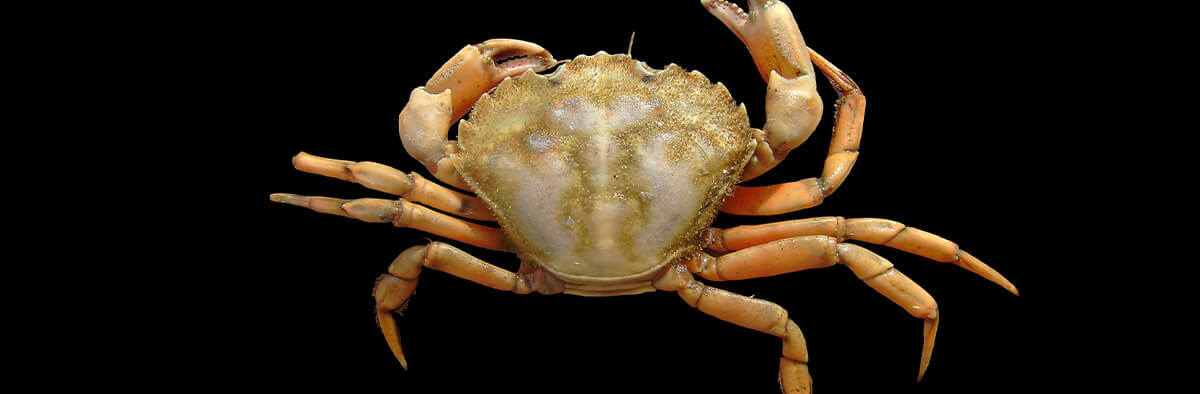
Every animal leaves traces of DNA in the environment—tiny fragments in soil or water that reveal where it’s been. This environmental DNA (eDNA) is one of the most powerful early-warning tools we have for stopping invasive species before they spread.
CXL, in partnership with Island Conservation and Oceankind, is developing a rapid eDNA test for the NABIT, our handheld, field-ready molecular tool. Instead of mailing samples to a lab and waiting weeks, conservation teams will be able to test directly in the field and get results in under 30 minutes. On islands where a single rat can undo years of restoration, that kind of speed can change the outcome entirely.
Note: This post was originally shared as a thematic email with our community in December 2025. To receive these deep dives directly in your inbox, you can subscribe here.