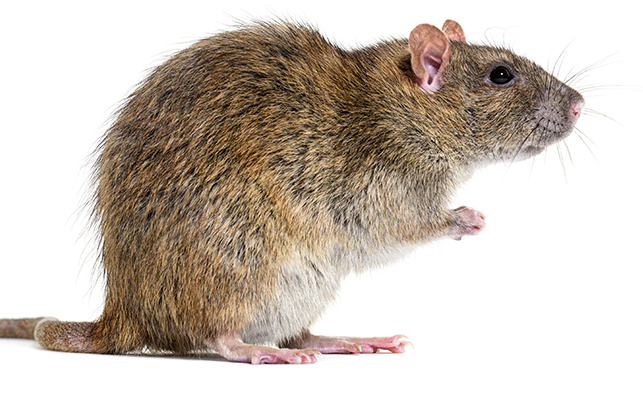
Rodents can cause major problems in wildlife conservation, agriculture, and public health. Non-native rats and mice are the leading cause of biodiversity loss worldwide. Rodents are also humanity’s greatest wild competitor for food grains, and rats and mice are a major source of over twenty diseases including leptospirosis and the plague.
Rodenticides are effective at controlling or even eliminating unwanted rodents, but at a cost: they poison and can even kill large numbers (up to 60%) of the very wildlife we seek to protect and cause hours to days of suffering for rodents and other animals that ingest them. Studies of deceased animals found traces of rodenticides in 82% of eagles, 95% of cougars, and 42% of California condors. Rodenticides used in urban and agricultural settings have occasional adverse consequences for pets and children.
Why a Competition?
Prizes harness worldwide problem-solving capacity by publicly announcing a defined challenge and offering incentives—prize money and scaling opportunities—for solutions meeting specific criteria. This approach has proven effective in fields from autonomous vehicles to vaccine development by attracting diverse expertise and de-risking early-stage innovation.
The Rodenticide Alternatives Prize (RAP) will incentivize experts in cutting edge endocrinology, immunology, reproductive biology, and genetics to develop humane and sustainable alternatives and establish a vibrant innovation community to find solutions. Innovations from the RAP could ultimately revolutionize how we control rodent populations across contexts, from biodiverse islands to farms to crowded urban spaces.
Why Now?
The European Union has declared anticoagulant rodenticides a “candidate for substitution” due to their toxicity. The US Environmental Protection Agency, state of California, and government of British Columbia have each placed major restrictions on the use of rodenticides, and cities like New York City and Boston are experimenting with alternatives. All this means a ready market for cost-effective, sustainable, humane alternatives. The time is also now ripe for a range of promising technologies—immunocontraceptives, chemosterilants, targeted drug delivery mechanisms, gene drives—to be fast-tracked to address this challenge. The problem is solvable, if we are willing to make the investment.
Examples of species preyed upon by invasive rodents:
Atlantic puffin
Galapagos tortoise
Oʻahu ʻelepaio
Galapagos crake
Want to Get Involved?
Send a message, and our team will reach out to you.
Thank you! Your submission has been received!
Oops! Something went wrong while submitting the form.