

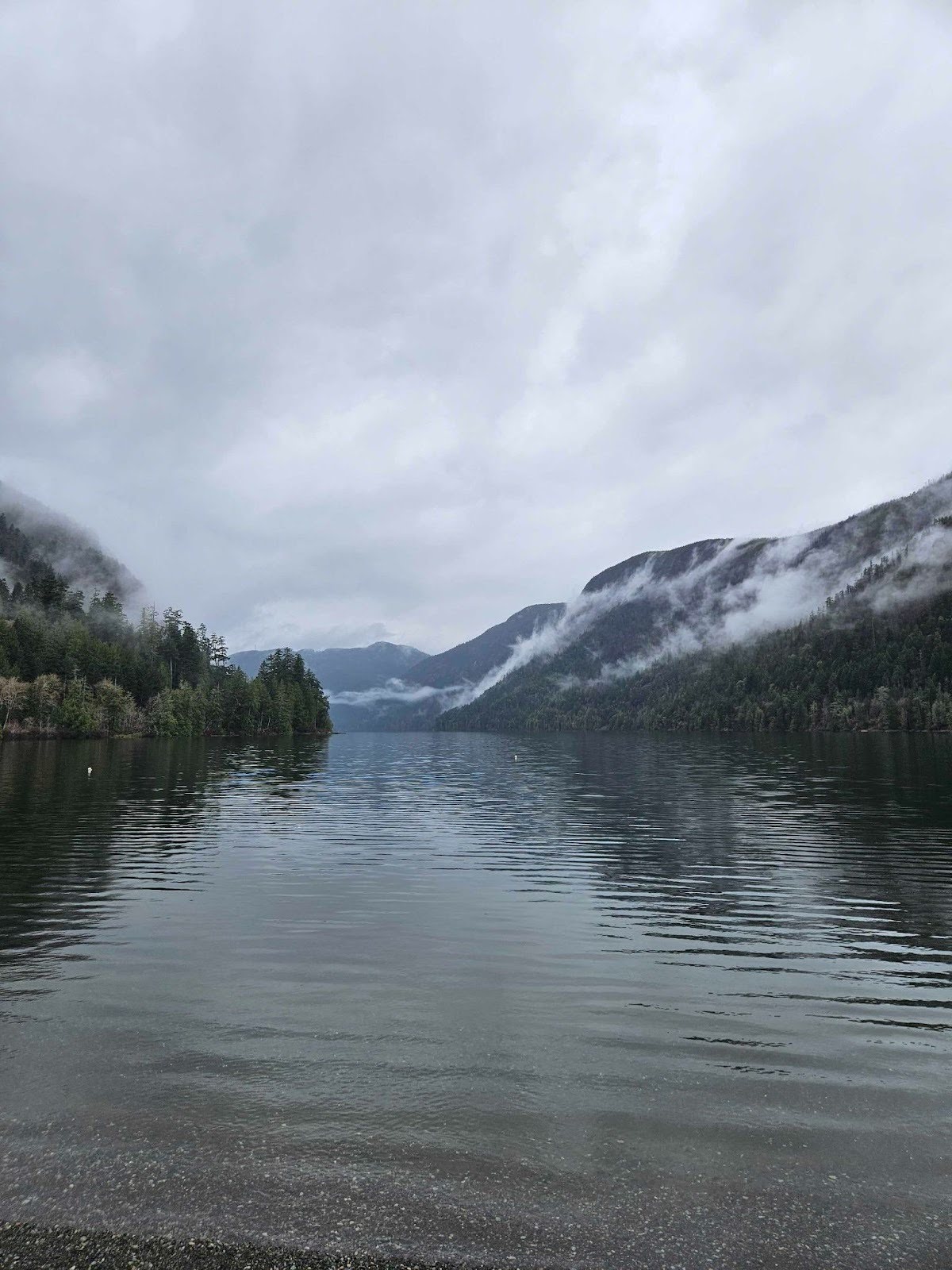
Getting data out of the field is one of the hardest problems in conservation tech. At CXL, our work takes us deep into dense forests, mountain valleys, islands, and remote environments where traditional infrastructure simply doesn't exist.
Sentinel, our AI tool that helps park rangers monitor wildlife and manage camera traps more efficiently across some of the world's most remote ecosystems, has to work even when there’s no cell signal. So we decided to put it to the test.
Our engineering team recently conducted a series of connectivity tests at Sutton Pass Ecology Reserve and Green Mountain in British Columbia, Canada, with the goal of de-risking satellite communications within dense forests.
Direct-to-Cell (D2C) technology allows devices like Sentinel to connect directly to satellites overhead, bypassing traditional cell towers entirely. This matters enormously for conservation work, because rangers, researchers, and monitoring equipment are often deployed in areas with zero terrestrial coverage. D2C, supplied in our tests by Rogers and SpaceX, offers a potential lifeline for data transmission in these conditions.
The goal was simple: de-risk satellite communications within dense forests.
Testing took place in a high-elevation valley between two mountain peaks. There was no cellular service available from terrestrial towers The environmental conditions were intentionally adverse:
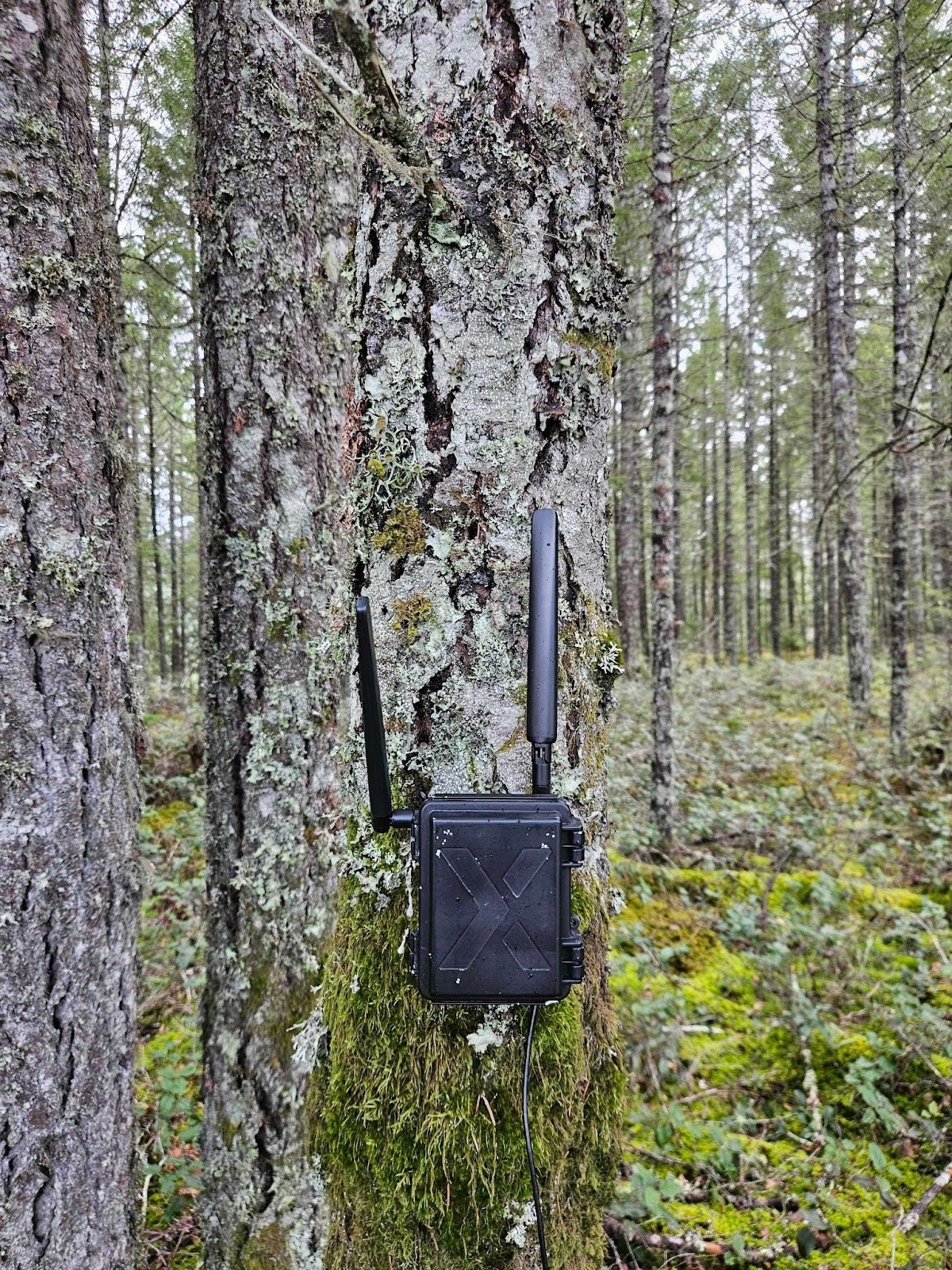
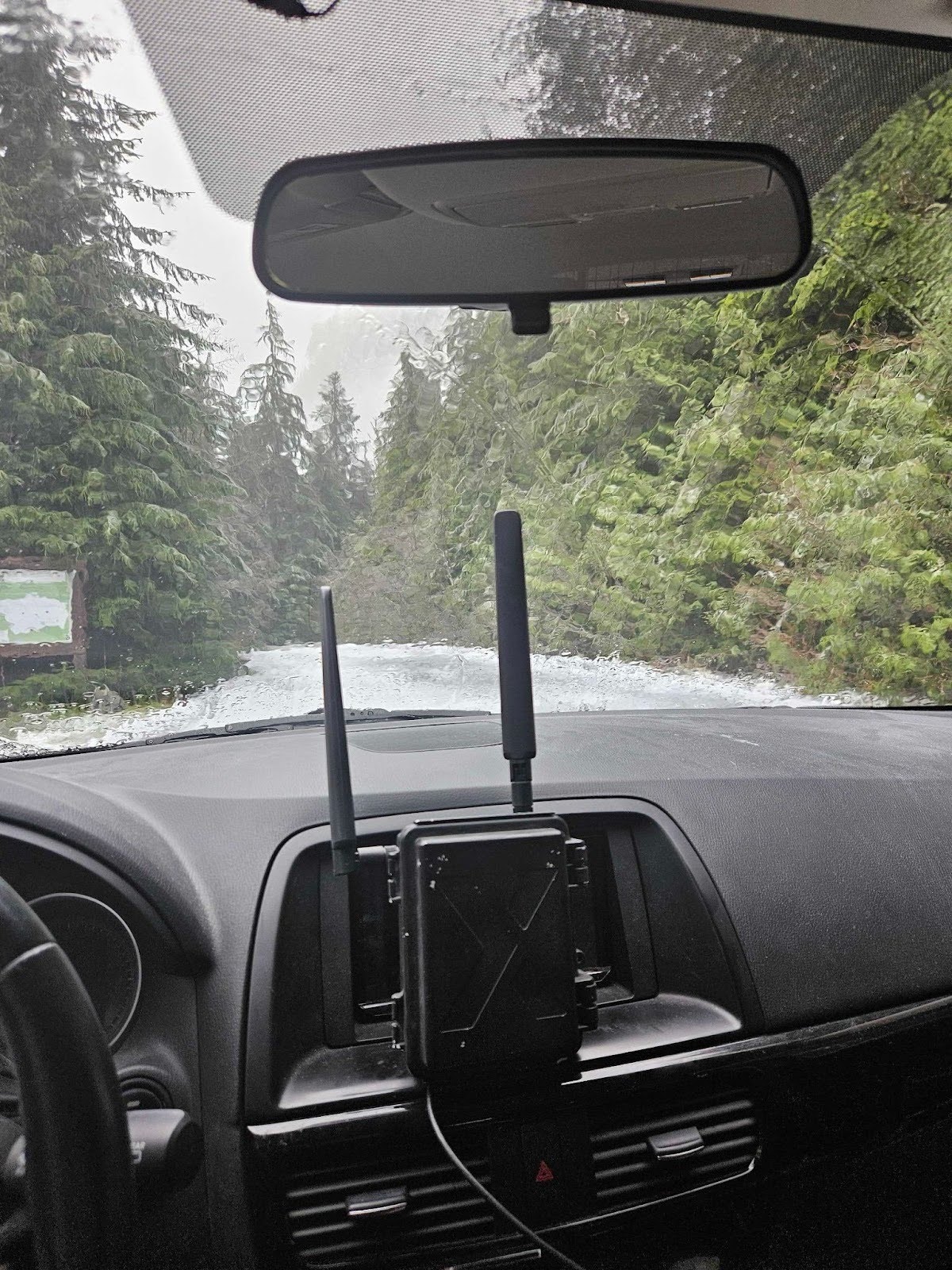
Our testing at Sutton Pass Ecology Reserve revealed a high degree of resilience. While standard SMS protocols did not succeed over satellite (they did succeed with terrestrial towers), our Data Transfer success rates remained remarkably consistent:
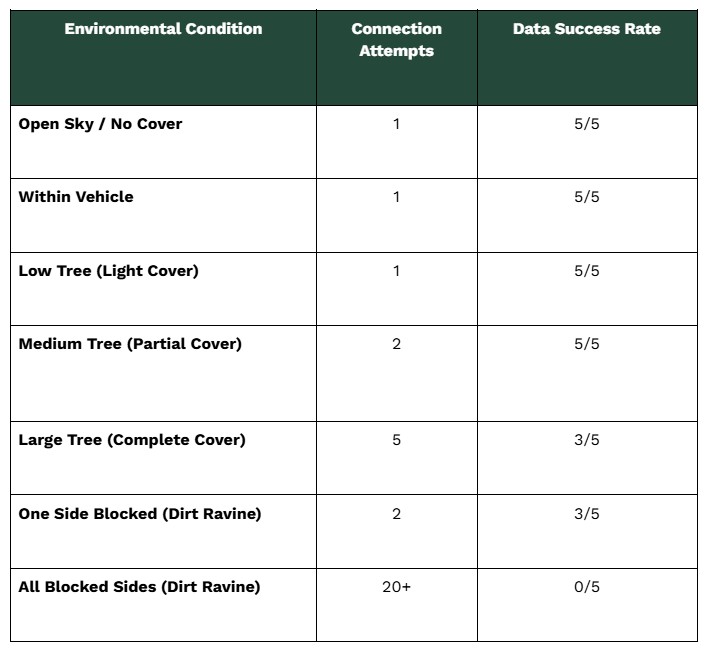
A critical portion of our data collection occurred at Green Mountain, where we mapped how physical orientation impacts signal "handshakes." We tested four cardinal directions around a single large tree trunk to determine if orienting a Sentinel in a particular direction would overcome connectivity issues:
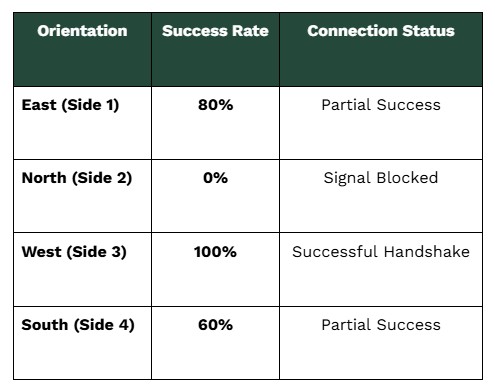
The field data confirms that the modem (Quectel EG21-G) can successfully process variable-length data payloads even in "non-line-of-sight" forest conditions. The primary takeaway for field deployment is simple: if a signal is blocked by terrain or large impassable objects (direct contact to trees or stones), a minor adjustment in orientation can result in a 100% restoration of data flow.
The results are clear: D2C Satellite connection appears to be viable for use by the Sentinel team for remote locations, even if there are obstacles in the way. When your mission-critical data needs to get through, Sentinel delivers.
