

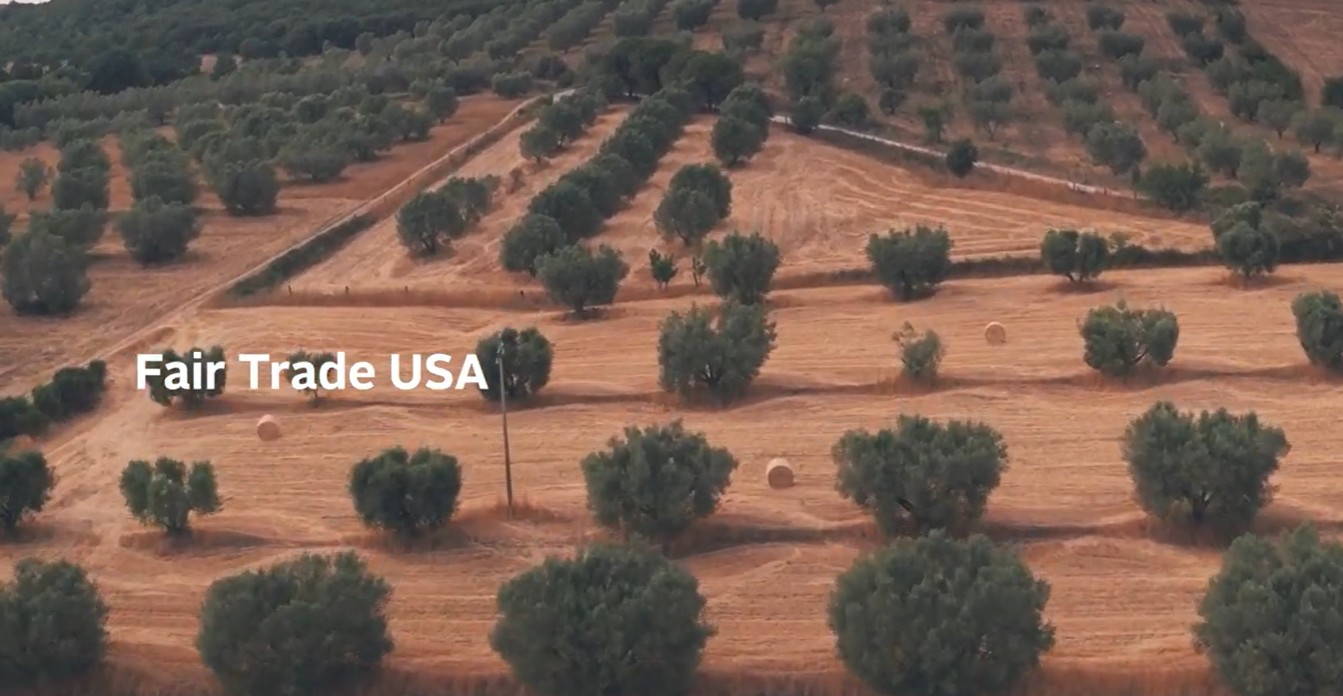
For Fair Trade USA, the concept of sustainability has always been rooted in the people who work the land. Through their new process innovation, they are transforming how nature intelligence is deployed on the ground—building a practical bridge that translates complex ecological metrics into culturally grounded, step-by-step guidance so smallholder farmers can protect both their livelihoods and their local ecosystems.
-
For decades, the global sustainability movement has operated on a top-down model, treating smallholder farmers as passive data providers tasked with feeding endless metrics into distant corporate supply chains. This extractive approach to data misses the most critical lever for environmental resilience: the farmers themselves. To create genuine systemic change, nature intelligence cannot just be a compliance tool used to satisfy global buyers; it must be a localized resource that empowers communities on the ground to make immediate, real-time operational decisions.
The fundamental crisis in corporate sustainability today isn't a lack of sophisticated data—it is an accessibility and ownership gap. When a biodiversity framework requires a 200-page guide and an expensive consultancy to interpret, it completely marginalizes the smallholder organizations that manage the vast majority of our global agricultural footprint. True ecological resilience is built when complex data is translated into a practical, culturally grounded language that turns risk analysis into immediate, localized action.
This is exactly where Fair Trade USA’s innovative process methodology bridges the gap. Designed by a team with decades of deep field experience, the solution is a practical, non-technical, step-by-step framework that connects open-source environmental data with local and indigenous knowledge. By anchoring these complex metrics directly into the geographic realities of smallholder cooperatives, the platform generates clear, actionable outcome indicators for soil, water, biodiversity, and tree cover without requiring a high-cost technical infrastructure.
What makes this methodology uniquely powerful is its ability to isolate specific regional vulnerabilities across complex, multi-member cooperative networks. Instead of forcing an entire organization to adopt sweeping, expensive adaptations, a cooperative manager can look at localized data to pinpoint exactly which valley or group of farms faces the highest risks—such as rising temperatures or coffee rust. This allows them to customize their resources, deploying highly targeted capacity building and cultural mitigation practices exactly where they are needed most.
This approach replaces a heavy data collection burden with active decision-making power. By standardizing this step-by-step process, the framework transforms complex ecological frameworks into a deployable roadmap. The result is a highly adaptable system that allows smallholder organizations to easily communicate their environmental stewardship to global buyers and financial institutions, ensuring they receive the recognition and financial retribution they deserve for protecting vital natural resources.
The Grand Challenge Experience
Fair Trade USA was selected as a finalist in the Nature Intelligence for Business Grand Challenge—a global competition convened by Conservation X Labs, the Taskforce on Nature-related Financial Disclosures (TNFD), and the United Nations Development Programme (UNDP) to find affordable, accessible nature data tools for small and medium-sized enterprises (SMEs).
For an early-stage innovation, scaling a new framework across marginalized or isolated producer organizations is a steep hurdle often limited by a lack of time and field resources. Smallholder cooperatives are already under immense pressure to map their farms and comply with shifting international legislation. For Fair Trade USA, the Grand Challenge provided a vital, collaborative platform to formally document, test, and iterate this methodology under real-world operational constraints.
During the finalist evaluation phase, the team put their framework straight to work with smallholder coffee producers in Colombia. By successfully integrating these data touchpoints into the existing trusted communication channels and training structures that field teams use every day, Fair Trade USA proved that nature intelligence can be scaled effectively and autonomously. This testing phase marks just the beginning, paving the way for an open-source playbook designed to build systemic resilience across different products, governance models, and landscapes worldwide. The work of these innovators is just getting started, proving that the future of nature-positive business is already here.
