

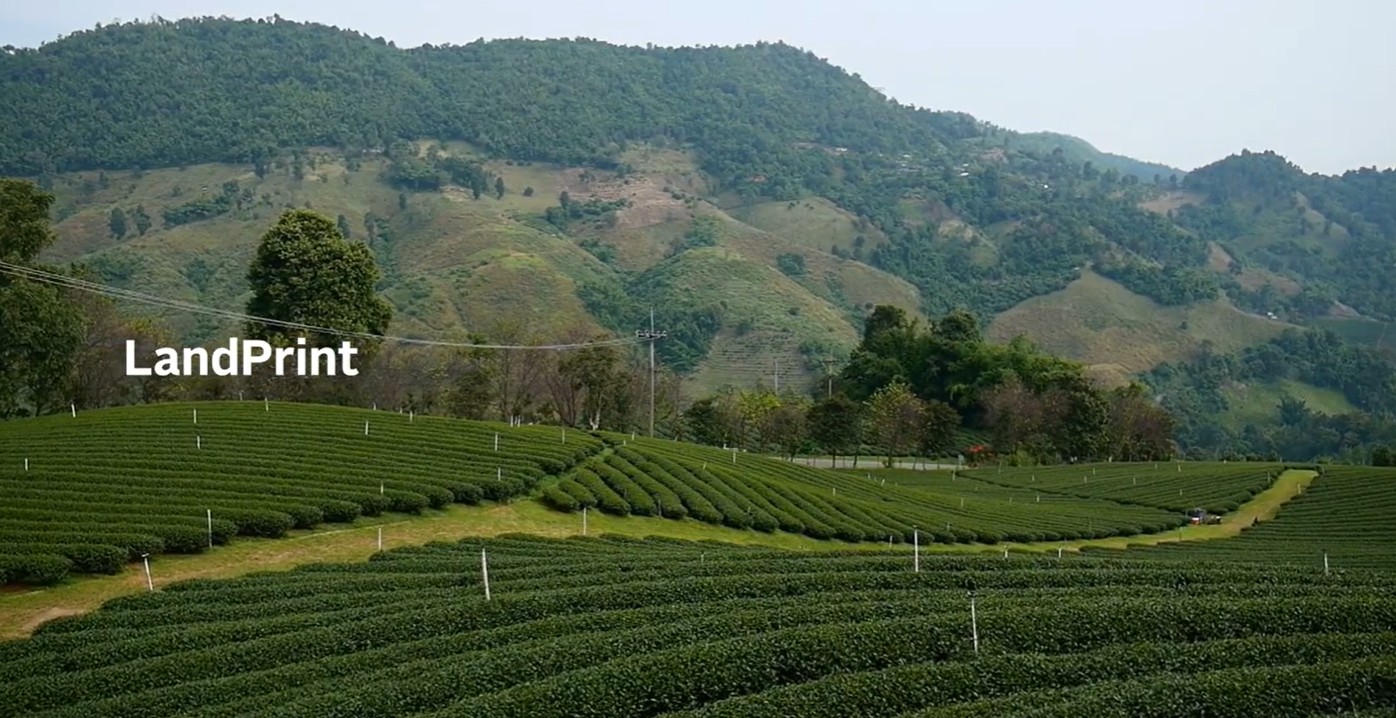
For Landprint, transforming global supply chains requires building from the ground up. Born out of a 15-year, multi-million dollar climate resilience initiative in the semi-arid region of Brazil, the data platform serves as a specialized infrastructure layer that unifies agricultural communities, multinational corporations, and global financial institutions. By converting chaotic fieldwork metrics into clear, standardized physical and financial risk models, Handprint enables commercial enterprises to justify, scale, and confidently mobilize capital into localized nature-based solutions.
-
Most data platforms approach supply chain tracking from a top-down, corporate perspective—prioritizing high-level dashboard metrics that satisfy distant regulatory boards but offer little utility to operators on the ground. This separation creates deep friction within nature markets. Small family farms and grassroots cooperatives are frequently inundated with fragmented, overlapping requests for ecological data from various buyers and lenders, yet they rarely see any financial benefit or strategic guidance in return. When data collection feels like an asymmetric administrative tax, data quality drops and local participation stalls.
To unlock scalable landscape restoration, environmental tech must move away from purely extractionary monitoring models and embrace a farmer-centric framework. The primary obstacle to scaling regenerative agriculture isn't a lack of willingness among producers; it is a profound lack of confidence and financial security during the multi-year transition period. Flipping the script means utilizing data not just as a compliance shield for corporations, but as a financial asset for the farm—proving how verified soil regeneration, habitat uplifts, and reduced physical risks systematically lower the cost of capital and secure higher commercial valuations.
An Analytical Middle Layer to Mobilize Restorative Capital
This structural integration is exactly what LandPrint is built to coordinate. Leveraging its foundations in applied statistical modeling and decades of rural development experience, the platform establishes a homogeneous, end-to-end data layer that connects every tier of the agricultural value chain. Instead of treating environmental metrics, corporate risk assessments, and impact investment requirements as separate data streams, LandPrint unifies them into a structured, three-phase operational cycle designed to convert raw data into targeted landscape investments.
Managing this massive influx of geospatial information presents a significant user-experience challenge, particularly for lean organizations without dedicated sustainability teams. To prevent analytical fatigue, Kuyua pairs an intuitive risk-cascade UI with a specialized, multilingual AI engine. This agent acts as a translation layer, synthesizing vast amounts of raw data into localized, actionable summaries. For a manufacturer evaluating a factory or an agricultural business assessing a landscape, the platform bypasses complex scientific jargon to reveal precisely how climate patterns and ecological degradation reinforce each other on the ground, delivering a ready-made roadmap for targeted mitigation.
The practical value of this approach extends across diverse operational scales and global markets. For large blue-chip corporations, the software provides a scalable framework to conduct portfolio-wide due diligence, allowing them to map their entire operating footprint and systematically roll those assessments down into their broader supply chains. Simultaneously, for small and medium-sized enterprises (SMEs) and localized habitat banks, the ability to generate rapid, auditable financial valuations of ecological risk acts as a major commercial accelerator—providing a trusted, standardized language to secure investments, engage local governments, and demonstrate long-term landscape resilience to global buyers.
The Grand Challenge Experience
Kuyua was selected as a finalist in the Nature Intelligence for Business Grand Challenge—a global competition convened by Conservation X Labs, the Taskforce on Nature-related Financial Disclosures (TNFD), and the United Nations Development Programme (UNDP) to find affordable, accessible nature data tools for small and medium-sized enterprises (SMEs).
For a fast-growing technology platform, entering the SME market requires validating that sophisticated enterprise-grade analytics can operate effectively within lean, resource-constrained business environments. For the creators of Kuyua, the Grand Challenge served as a vital global launchpad to test their software across drastically different regulatory landscapes, corporate structures, and geographic biomes.
During the finalist evaluation phase, the team deployed their platform in real-world pilots spanning from specialized agricultural businesses in Japan to extensive industrial operations in South America. The testing phase proved that by lowering data-entry friction and translating complex ecological metrics into clear financial vulnerability assessments, advanced nature intelligence can be adopted autonomously by any business, anywhere in the world. The work of these innovators is just getting started, proving that the future of nature-positive business is already here.
