

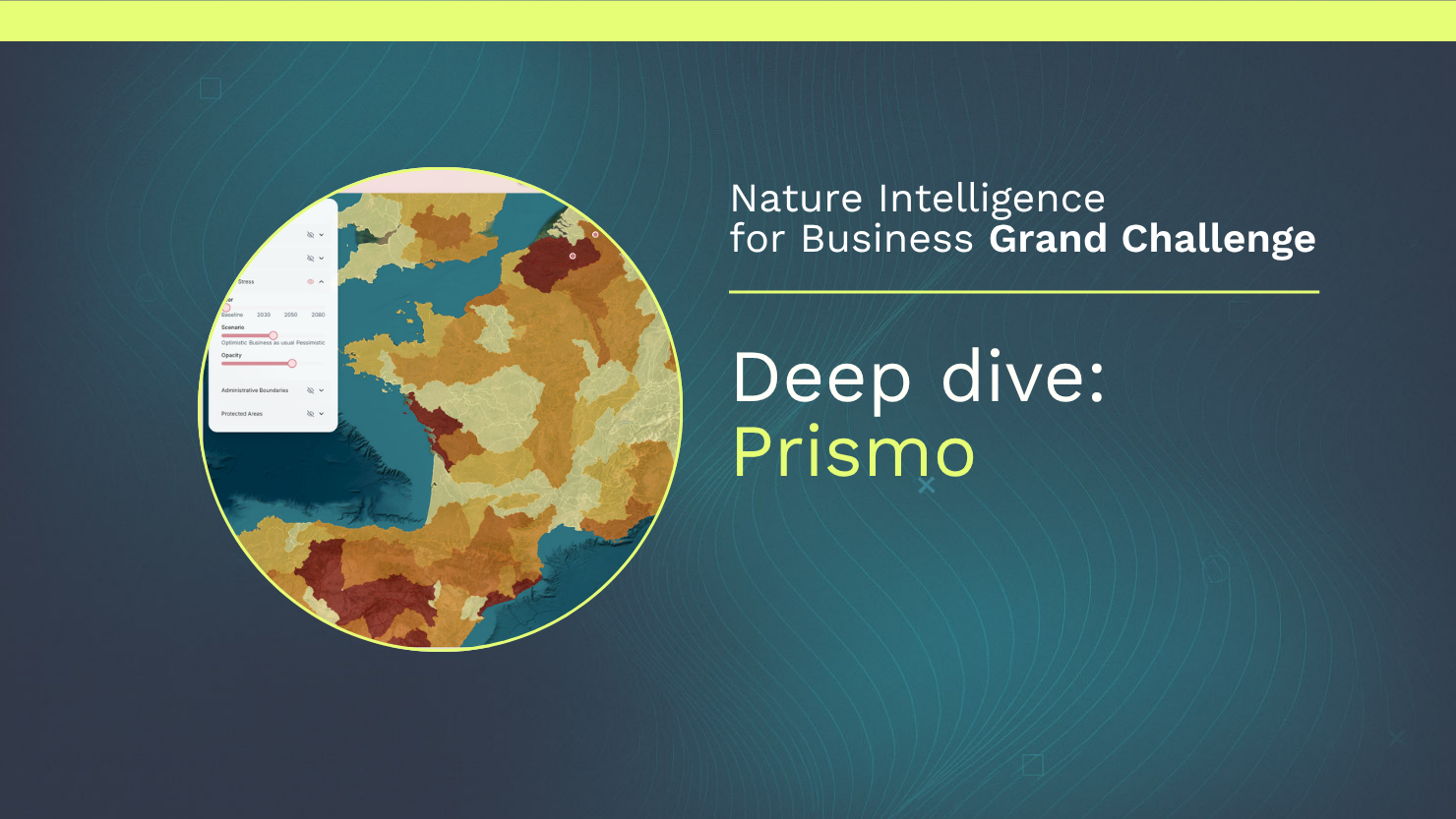
For Prismo, the primary barrier to widespread corporate nature action isn't a lack of scientific data—it is a lack of data clarity. Co-founded by a theoretical ecologist and a veteran sustainability consultant, the platform serves as an accessible biodiversity assessment engine built to demystify complex geospatial metrics.
-
The modern corporate sustainability conversation often treats biodiversity loss as a distant, abstract concept—an "externality" that exists entirely off the balance sheet. While carbon footprints can be reduced to a single, easily tracked number, assessing an ecosystem requires navigating a dense web of localized variables, including soil health, species richness, water availability, and habitat fragmentation. For small and medium-sized enterprises (SMEs) operating on tight margins, this sheer complexity creates an immediate bottleneck. Without the massive budgets required to hire specialized environmental consultants or maintain in-house sustainability divisions, smaller businesses frequently find themselves locked out of effective nature risk management.
To drive meaningful, widespread adoption of nature-positive practices, environmental technology must focus heavily on user accessibility and explainability. A dense spreadsheet of raw geospatial coordinates or specialized ecological indices provides little value to a busy supply chain manager or procurement officer. Software tools must bridge this gap by functioning as a reliable, automated interpreter—taking vast amounts of raw data, distilling it down to its absolute core, and providing clear, contextual explanations that tell a business exactly where its vulnerabilities lie and why they demand immediate attention.
Fusing Geospatial Intelligence with AI Explanations
This emphasis on intuitive design is precisely how Prismo’s assessment platform is engineered. Recognizing that raw environmental metrics can easily overwhelm non-technical users, the technical team built a software architecture that pairs multi-layered geospatial tracking with a highly interactive artificial intelligence interface. Instead of forcing users to sift through fragmented data points across multiple public and private registries, the system unifies these disparate datasets behind a streamlined, user-friendly control panel.
The true operational power of this approach lies in its ability to handle complex, multi-regional analysis seamlessly:
This balanced combination of scientific rigor and intuitive design makes Prismo highly valuable to mid-sized companies managing distributed agricultural networks. For an enterprise sourcing raw materials across multiple countries, the platform clarifies what would otherwise be a dark blind spot. By transforming abstract biodiversity concepts into a clear, visual risk map, the software enables operational teams to instantly pinpoint where their environmental risks are low, where intervention is critical, and how to structure mitigation strategies to achieve the maximum possible impact on the ground.
The Grand Challenge Experience
Prismo was selected as a finalist in the Nature Intelligence for Business Grand Challenge—a global competition convened by Conservation X Labs, the Taskforce on Nature-related Financial Disclosures (TNFD), and the United Nations Development Programme (UNDP) to find affordable, accessible nature data tools for small and medium-sized enterprises (SMEs).
For an agile, early-stage technology startup, the primary commercial hurdle is demonstrating that advanced digital tools can successfully convey the immediate, material urgency of ecosystem degradation to corporate decision-makers. The Grand Challenge provided Prismo with a vital global stage to validate its emphasis on explainability against the lean, fast-paced operational realities of commercial supply chains.
During the finalist evaluation phase, the team tested their platform's capabilities alongside active commercial enterprises, demonstrating that removing data friction allows lean businesses to assess their environmental footprints confidently and autonomously. By proving that complex ecological metrics can be translated into clear, human-centered business intelligence, Prismo has established a practical pathway for companies looking to protect both their operations and the landscapes they depend on. The work of these innovators is just getting started, proving that the future of nature-positive business is already here.
