In December 2022, the 196 parties to a UN treaty agreed on 23 targets to halt and reverse biodiversity loss by 2030. Last month in Yerevan, Armenia, they met to check their work. The UN's own assessment found that fewer than half of the national targets countries have assessed are on track.
Conservation X Labs was there, and we spent most of our time tackling an often-overlooked impact area for conservationists: how small and medium-sized businesses — the backbone of the global supply chain — can address their nature-related impacts, risks, opportunities, and dependencies.
COP stands for Conference of the Parties, the meeting where the countries bound by a treaty make decisions about it. The climate COPs get most of the headlines. This one belongs to the Convention on Biological Diversity, which opened for signature at the 1992 Rio Earth Summit and meets about every two years.
A COP is really two events stacked on top of each other. Negotiators work through treaty text line by line. Around them, in pavilions, side events, and hotel conference rooms, scientists, companies, Indigenous leaders, and funders try to build what that text will need in order to work. More than 10,000 delegates came to Yerevan this year.
The negotiators adopted nearly 50 decisions and the Yerevan Pathway, a set of priorities for the four years left before the 2030 deadline. Nearly $2 billion in new funding was announced. Some of the hardest questions, including how biodiversity finance gets managed, moved to COP18 in Ecuador.
The same UN assessment singled out targets involving business action as among those furthest behind. In February, the intergovernmental science panel IPBES reported that fewer than 1% of publicly reporting companies even mention their impacts on biodiversity. Target 15 of the framework attempts to change that. It calls on governments to get large companies and financial institutions to assess and disclose their biodiversity risks, dependencies, and impacts, including across their value chains.
Those value chains run through small and medium-sized enterprises, which make up about 90% of the world's businesses, or roughly 300 million companies. Many now get data requests from corporate customers that they don't have the staff, budget, or tools to answer. Most of them were not in Yerevan. If disclosure only works at the top of the chain, the disclosures won't mean much.
At CXL, we strongly believe that changing behavior at scale means changing incentives. When the responsible thing is also the convenient thing, positive change happens. If a nature assessment requires hiring an expensive consultant, that puts it out of reach for millions of businesses. Our Nature Intelligence for Business Grand Challenge tries to make it possible for anyone to identify, assess, and respond to how their business depends on and affects nature, at a cost they can actually pay.
The Nature Intelligence for Business Grand Challenge was created with TNFD and UNDP, with support from Germany's International Climate Initiative. It drew more than 380 applications from 46 countries. Twelve finalists tested their tools with more than 20 small businesses across 13 countries, and in May three won: Dunya Analytics, Mozaic Earth, and Space Eagle Enterprises. Our job in Yerevan was to stand behind those teams and make the case, to anyone who would listen, that nature intelligence belongs in businesses of every size.
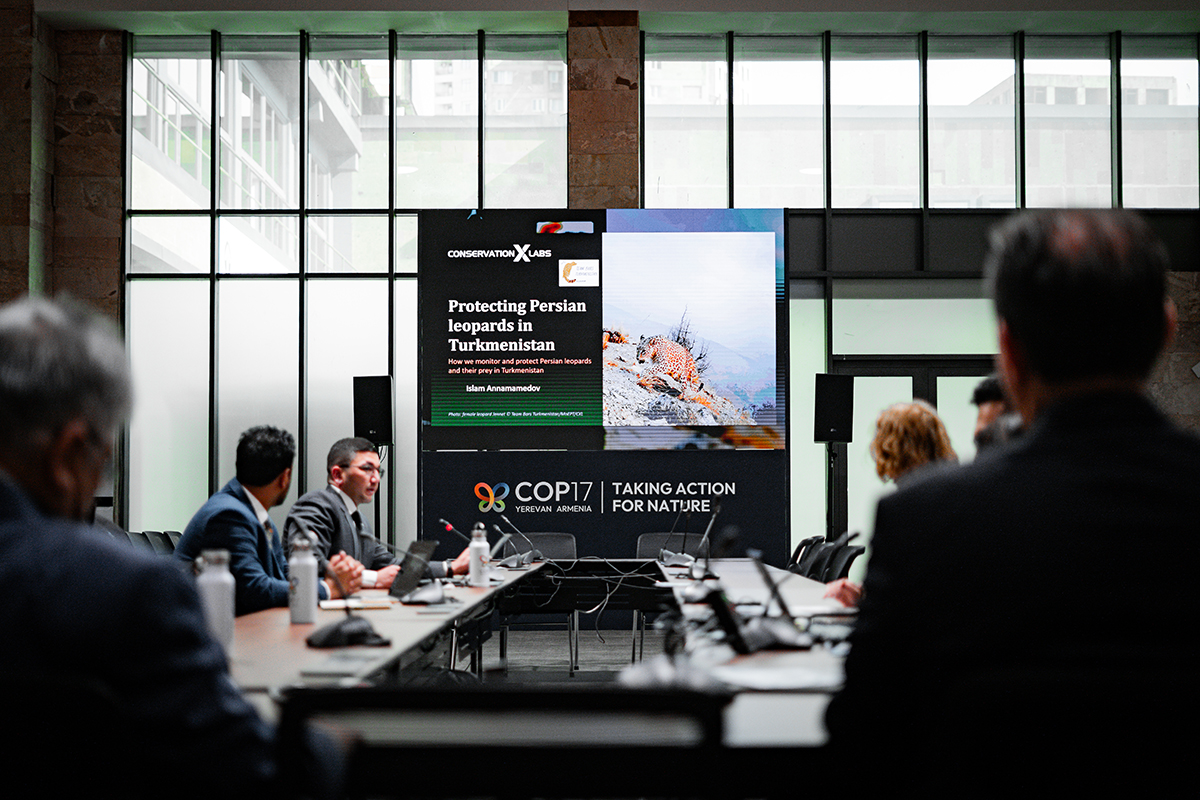
The Grand Challenge partners are still working with the winners and finalists on technical support, funding, and pilots. CBD Executive Secretary Astrid Schomaker said the test of Yerevan is what governments "change when they return home." The same goes for business. COP18 meets with two years left on the clock, and by then we'd like a lot more suppliers answering those data requests with real numbers.
If you run a small business, or buy from one, start with the 12 finalists.